


Dental Implants vs Dentures: Which Tooth Replacement Option Is Right for You?
Losing one or more teeth can be a life-changing experience. Whether tooth loss occurs due to decay, gum disease, trauma, or aging, replacing missing teeth is important for both oral health and overall wellbeing.
When patients visit our Prosthodontics Department, one of the most common questions they ask is:
“Should I choose dental implants or dentures?”
The answer depends on several factors, including oral health, budget, lifestyle, long-term goals, and the number of missing teeth.
Both treatment options can restore your smile, but they work in very different ways and offer distinct advantages.
This guide explores the differences between dental implants and dentures, helping you understand which option may be best suited to your needs.
Why Replacing Missing Teeth Is Important
Some patients assume that replacing missing teeth is purely cosmetic. However, tooth loss can lead to several functional and health-related issues.
Missing teeth may cause:
- Difficulty chewing certain foods
- Changes in speech
- Loss of facial support
- Jawbone deterioration
- Shifting of surrounding teeth
- Increased risk of bite problems
- Reduced confidence and self-esteem
The longer missing teeth remain untreated, the more complex the situation can become.
This is why dentists often recommend early evaluation and treatment planning following tooth loss.
Understanding Dental Implants
Dental implants are considered one of the most advanced tooth replacement solutions available today.
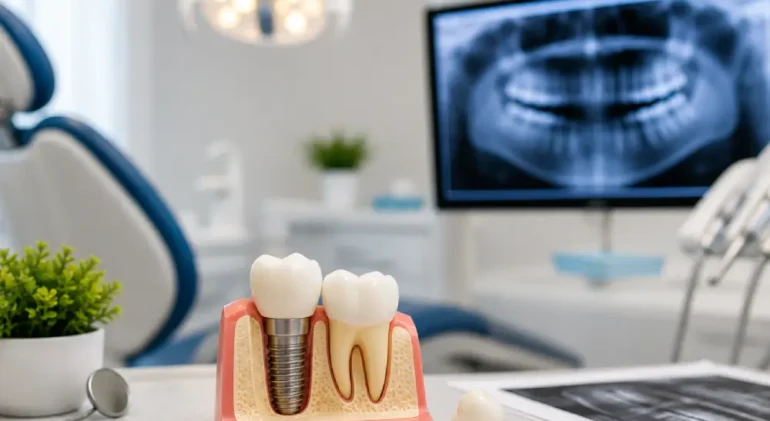
A dental implant consists of:
Implant Fixture
A titanium post surgically placed into the jawbone.
Abutment
A connector piece attached to the implant.
Restoration
The visible crown, bridge, or denture supported by the implant.
Once placed, the implant integrates with the jawbone through a natural process known as osseointegration.
This creates a stable foundation that closely mimics the function of a natural tooth root.
Patients considering implant treatment often begin with a comprehensive Dental Check-Up to evaluate bone quality and oral health.
What Are Dentures?
Dentures are removable prosthetic devices designed to replace missing teeth and surrounding tissues.
There are several types:
Complete Dentures
Used when all teeth are missing.
Partial Dentures
Used when some natural teeth remain.
Implant-Supported Dentures
A hybrid solution that combines implants with removable dentures for improved stability.
Traditional dentures rest on the gums rather than being anchored into the jawbone.
While they can effectively restore appearance and function, they do not provide the same level of support as dental implants.
Dental Implants: Key Benefits
Natural Appearance
One of the biggest advantages of dental implants is their natural look.
Implant-supported crowns are designed to match:
- Tooth shape
- Tooth size
- Color
- Alignment
Most people cannot distinguish an implant from a natural tooth.
Superior Stability
Unlike removable dentures, implants remain securely fixed in place.
Patients can comfortably:
- Eat
- Speak
- Laugh
- Exercise
- Socialize
without worrying about movement or slipping.
Preservation of Jawbone
When a tooth is lost, the jawbone beneath it begins to shrink due to lack of stimulation.
Dental implants help maintain bone density by functioning similarly to natural tooth roots.
This is one of the most significant long-term benefits of implant treatment.
Long-Term Durability
With proper oral hygiene and regular dental care, implants can last for decades.
Many patients view implants as a long-term investment in their health and quality of life.
Routine Teeth Cleaning & Polishing appointments help maintain implant health and reduce the risk of complications.
Dentures: Key Benefits
Despite advances in implant dentistry, dentures remain a valuable treatment option for many patients.
Lower Initial Cost
Traditional dentures generally require a lower upfront investment than implants.
For patients seeking immediate tooth replacement, dentures may be a practical solution.
Non-Surgical Treatment
Dentures do not require implant surgery.
This makes them suitable for individuals who:
- Cannot undergo surgery
- Have significant medical concerns
- Prefer non-invasive treatment
Faster Treatment Timeline
Traditional dentures can often be completed more quickly than implant procedures, which may require healing periods lasting several months.
Comparing Comfort and Function
Comfort is a major factor when choosing a tooth replacement solution.
Dental Implants
Patients often report:
- Excellent stability
- Natural chewing ability
- Improved confidence
- Minimal movement
Many patients eventually forget they even have implants.
Dentures
Although modern dentures are more comfortable than ever, some patients experience:
- Gum irritation
- Pressure spots
- Movement during eating
- Difficulty with certain foods
Adjustment periods are common when wearing dentures for the first time.
Eating and Nutrition
Tooth loss can significantly affect dietary choices.
With Dental Implants
Patients can typically enjoy:
- Fruits
- Vegetables
- Nuts
- Meat
- Crunchy foods
without major restrictions.
With Dentures
Some foods may be more challenging, including:
- Sticky foods
- Hard foods
- Tough meats
Many patients adapt successfully, but chewing efficiency is generally lower than with implants.
Speech and Confidence
Missing teeth can affect pronunciation and speech clarity.
Dental implants often provide the most natural speech experience because they remain fixed in place.
Some denture wearers require an adjustment period before speech returns to normal.
Confidence can also be significantly affected by concerns about denture movement during conversations or meals.
Who Is a Good Candidate for Dental Implants?
Ideal candidates typically have:
- Healthy gums
- Adequate jawbone volume
- Good overall health
- Commitment to oral hygiene
Certain conditions may require additional treatment before implant placement.
For example:
- Gum disease may require Gum Treatment
- Damaged teeth may require Tooth Extraction
- Bone loss may require grafting procedures
A comprehensive consultation is essential for determining candidacy.
Common Myths About Dental Implants
Myth 1: Implant Surgery Is Extremely Painful
Most patients report surprisingly little discomfort during implant placement.
Modern anesthesia and techniques make the procedure highly manageable.
Myth 2: Implants Look Artificial
Today’s implant restorations are highly aesthetic and designed to blend seamlessly with natural teeth.
Myth 3: Older Adults Cannot Get Implants
Age alone is rarely a barrier.
Many successful implant patients are in their 60s, 70s, and beyond.
How to Care for Dental Implants and Dentures
Implant Maintenance
- Brush twice daily
- Floss regularly
- Attend routine dental visits
- Schedule professional cleanings
Denture Maintenance
- Clean daily
- Remove during sleep when advised
- Store properly
- Attend regular dental reviews
Even denture wearers require routine oral examinations.
Which Option Is Best for You?
Both dental implants and dentures can successfully restore missing teeth, improve function, and enhance appearance. The best solution depends on your oral health, lifestyle, expectations, and long-term goals.
Patients seeking maximum stability, comfort, and long-term bone preservation often choose dental implants. Those looking for a more affordable or non-surgical solution may find dentures to be an excellent alternative.
A professional dental evaluation is the most reliable way to determine the right treatment plan for your specific needs.